|
Từ điển Oxford Advanced Learner 8th
 oblige

ob·lige [oblige obliges obliged obliging] BrE [əˈblaɪdʒ] NAmE [əˈblaɪdʒ] verb (formal)
1. transitive, usually passive ~ sb to do sth to force sb to do sth, by law, because it is a duty, etc
•Parents are obliged by law to send their children to school.
•I felt obliged to ask them to dinner.
•He suffered a serious injury that obliged him to give up work.
2. intransitive, transitive to help sb by doing what they ask or what you know they want
•Call me if you need any help— I'd be happy to oblige.
•~ sb (with sth) Would you oblige me with some information?
•~ sb (by doing sth) Oblige me by keeping your suspicions to yourself.
Verb forms: 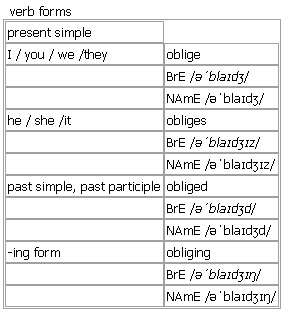
Word Origin:
Middle English (in the sense ‘bind by oath’): from Old French obliger, from Latin obligare, from ob- ‘towards’ + ligare ‘to bind’.
Example Bank:
•The fans were looking for another goal and Owen duly obliged.
•The staff are always happy to oblige.
•Will you oblige by filling in this form?
•Would you be willing to oblige us with some information?
•Employees should not feel obliged to work extra hours.
•In the UK, you are not obliged to carry any form of identification.
•Ministers are obliged to declare their personal interests.
•She was annoyed that she had felt obliged to explain.
•Suppliers aren't legally obliged to provide a warranty.
•The landlord is obliged to give tenants 24 hours' notice of a visit.
•We felt obliged to sit with them.
|
|
|
▼ Từ liên quan / Related words
Related search result for "oblige"
|
|
